
Silicone rubber keypads offer many unique advantages to users that they don’t experience when using other keypads. Silicone keypads are a popular choice as not only does the material type make it reliable in many different environments, but the keypads are able to provide clear tactile feedback.
Positive tactile response
Silicone keypads can be engineered to provide a distinct snap or tactile break when pressed, this means that they can meet the tactile benefits of traditional plastic keypads but in a material better suited to the environment.
Adjustable tactile feel
When designing the keypads, changes can be made to the feedback, meaning they can be engineered so the product responds either to light touches or requires a firmer push, in line with the industry use.
Comfortable, familiar feel
Silicone has a soft surface that makes it more comfortable during repetitive use rather than plastic keypads. The tactility also means that the keypad has a more familiar user experience, that resembles traditional keypads compared to flat membrane keypads, making them more comfortable and more familiar to operators.
Extended reliability
Due to the robust properties of silicone, it can maintain a reliable tactile performance throughout its lifecycle, even over extended periods of time in harsh environments.
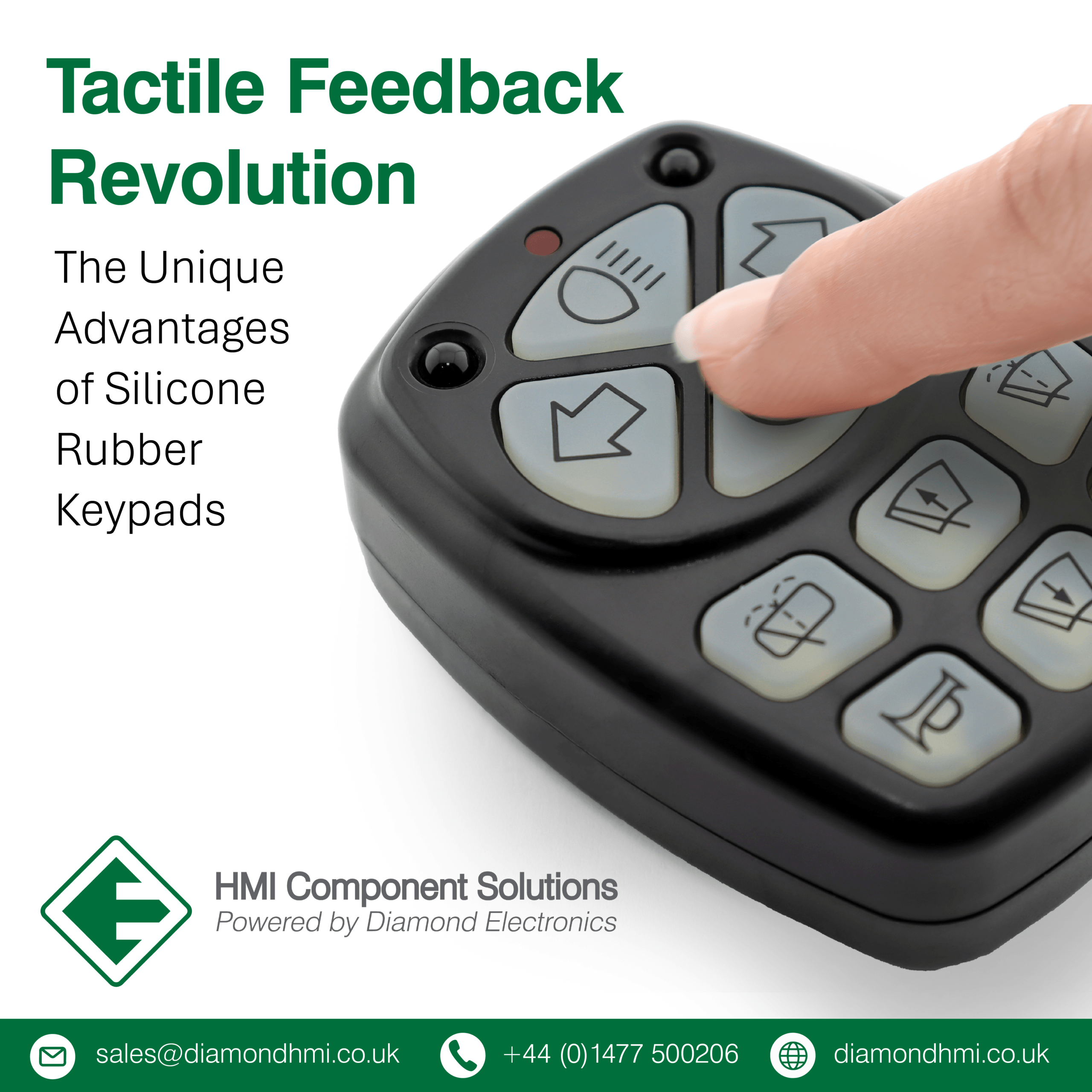
These features have a significant benefit to users. Firstly, having a positive tactile response means there would be a reduction of input errors and better blind operation, this is because tactility reduces both uncertainty and repeated button presses, allowing operators to focus on the displays/processes instead of the keypad. Equally in an environment where gloves may be used, tactility is important. Having tactile feedback is extremely important if there is limited visibility or high input levels.
At Diamond, we recognise the importance of the user experience, and having machines that work for you and the environment, that why we make sure to engineer keypads to meet your specifications.