
HMI solutions have transformed healthcare and medical devices, enabling hospitals to evolve from paper-based systems into high technology environments with continuous monitoring and advanced connectivity.
From touchscreen handheld devices to smart medical equipment, Human Machine Interfaces (HMIs) are at the forefront of the digital healthcare revolution. They play a vital role in enhancing patient care, improving efficiency, and supporting clinical decision-making.
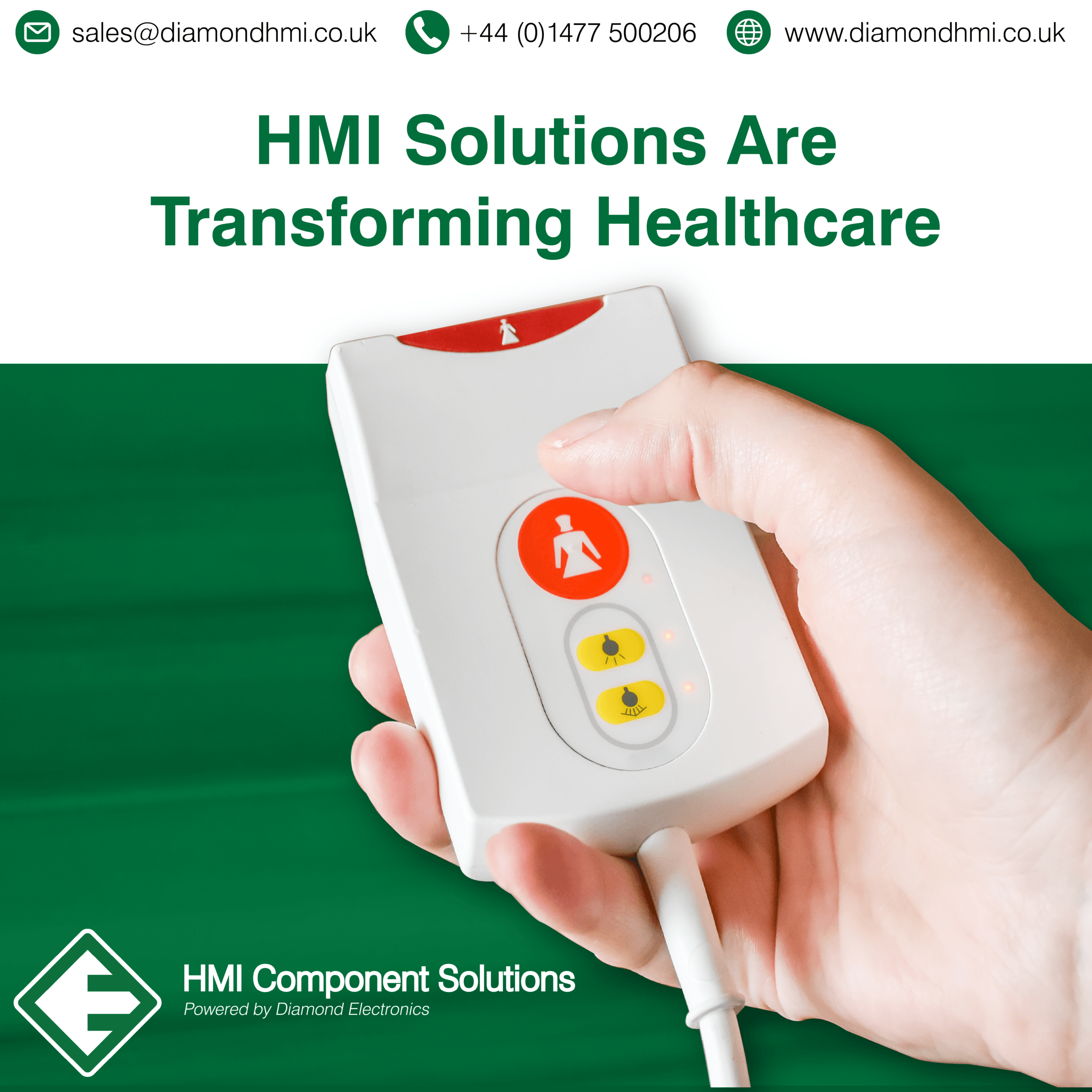
The introduction of digital systems in healthcare began with patient call systems, where HMI keypads became critical to patient safety. These systems rely on simple, intuitive keypad designs that allow patients to raise alerts quickly and easily. To meet healthcare standards, patient call systems must be highly reliable, easy to clean, and durable, while also being modular and scalable, from a small number of beds to an entire hospital network.
Over time, these systems have evolved from basic bell alerts into fully integrated platforms featuring reporting, monitoring, and call escalation capabilities. Despite this advancement, the core remains the same: a simple, user-friendly HMI keypad that ensures accessibility and reliability.
Following this, healthcare moved towards the digitalisation of patient records. The introduction of rolling computer carts and handheld devices enabled clinicians to document and access patient information more efficiently. These portable systems improve communication, reduce reliance on paper, and support accurate, real-time record keeping.
However, HMI input devices such as keyboards represent a significant hygiene risk, as high touch surfaces can facilitate the spread of harmful bacteria. This makes thoughtful design essential, ensuring devices can be thoroughly cleaned and sanitised. The integration of antimicrobial additives and coatings into HMI solutions can significantly reduce the risk of healthcare-associated infections.
The use of antimicrobial technology in high-touch devices, such as keyboards, is fast becoming the future of HMI solutions in healthcare. These devices are fully sealed and incorporate Biocidal Products Regulation (BPR)-approved antimicrobial additives within both the material and coating. This approach not only reduces microbial growth which is tested against organisms such as E. coli, MRSA, and Klebsiella pneumoniae, but also ensures compatibility with rigorous cleaning protocols.
By embedding antimicrobial agents directly into the device material, the need for removable covers is eliminated, reducing maintenance issues and the risk of damage or loss.
Diamond HMI has developed a range of sealed keyboards and mice featuring this technology under the ioniTOUCH™ brand. This microtechnology can also be applied across a wider range of healthcare HMI solutions, supporting the development of safer, more hygienic clinical environments.
If you are interested in ioniTOUCH™ or would like to explore a custom HMI solution for a healthcare application, please contact us today.