
Diamond HMI
  • Diamond HMI
    • About Us
    • Quality
    • Vacancies
  • Products
    • Silicone Rubber Keypads
      • About Silicone Rubber Keypads
      • Applications of Rubber Keypads
      • Combikey Keypads
      • Plastic And Rubber Keypads
      • Rubber Keypad Design Guide
      • Rubber Keypad Design Tool
      • Rapid Prototyping for Silicone Rubber Keypads
    • Membrane Keypads
      • Membrane Keypad Design and Construction
      • Backlighting a Membrane Keypad
      • Membrane Keypad Design Guide
    • Touch Switching Technology
      • Capacitive Touch Keypads
      • PiezoTouch Keypads
      • PiezoTouch Switches
      • PiezoTouch for Water Dispensing
      • PiezoTouch for Intercom & Door Access
      • PiezoTouch for Sanitary Applications
      • PiezoTouch for Ticketing Applications
      • PiezoTouch for Traffic Solutions
      • R-Force Sensing
    • QWERTY Keyboards and Keypads
      • Wipeable Keyboards
      • Industrial Keyboards
      • Metal Pointing Devices
      • Metal Keypads
    • Keyboards for Healthcare
      • Medical Keyboards for Infection Control
      • Antimicrobial Keyboards for Dental practices
      • ioniTOUCH™ Medical Keyboards
    • Integrated Display Solutions
      • LCD, OLED & TFT Display Technology
      • Panel PC Systems
  • Diamond HMI News
  • Blog
  • Contact

Avoiding Common Mistakes In Rubber Keypad Integration

Home » Blog » Avoiding Common Mistakes In Rubber Keypad Integration

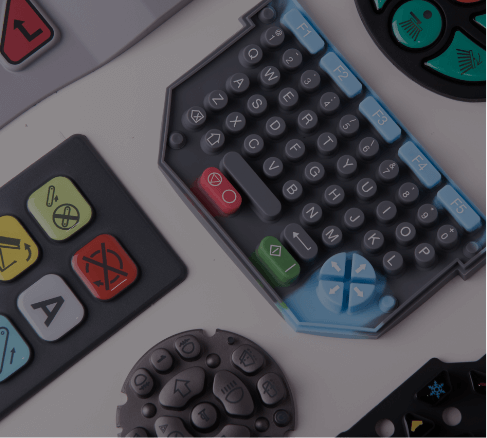
Achieving the style and tactile response from Silicone Rubber Keypads can be a complicated process. I strongly recommend that any potential customer considering integrating a Keypad into new product should ensure that they start a dialogue with us early in the project life cycle. By doing this, many of the common design and project timing issues can be avoided which in many instances leads to a lower cost solution.

When beginning to consider designing a Rubber Keypad you first have to decide how to best position the keypad within an assembly and how to choose the correct clamping method and rubber shore hardness depending on the environment the product will be used in and the desired IP rating you wish to achieve.

The base of the keypad is typically supported by a PCB but there are several styles of top case and keypad designs, which when assembled can achieve IP ratings up to IP67. You also need to consider what clearances are required to allow the keys to operate freely and also how the product will be assembled and what alignment features you will use to enable this.

To assist in the design we can supply a free Design Tool consisting of a range of 20 different operating forces and travel, 4 different shore hardness`s and different styles of switching with varying Carbon Pills and even a Metal Dome for comparison.

We would recommend that you contact Diamond Electronics before beginning the design process so we can provide guidance on how to achieve a simple and effective solution that meets all your requirements, with many years’ experience of supplying effective solutions we can also advise on what methods would best suit your budget all of which sets you on the right path to achieving your goal.
Diamond HMI
  • Diamond HMI
  • News
  • Blog
  • Contact
  • Areas of specialism
  • PCB & Panel Mount Switches

Diamond Electronics Ltd
Fourways Technology Park
London Road
Smallwood
Nr. Sandbach
Cheshire
CW11 2US
United Kingdom

  • Tel: +44 (0)1477 500450
  • Sales: +44 (0)1477 505206
  • HMI Divisionsales@diamondhmi.co.uk
  • Diamond Electronics Salessales@diamondelec.co.uk
  • Accessibility
  • Privacy Policy
  • Site Map
  • Terms & Conditions of Use

We are using cookies to give you the best experience on our website.

You can find out more about which cookies we are using or switch them off in .

To continue with default settings below, click Save & Close.


Strictly Necessary Cookies

Additional Cookies

Diamond HMI
Powered by  GDPR Cookie Compliance
Privacy Overview

This website uses cookies so that we can provide you with the best user experience possible. Cookie information is stored in your browser and performs functions such as recognising you when you return to our website and helping our team to understand which sections of the website you find most interesting and useful.

Strictly Necessary Cookies

Strictly Necessary Cookies should be enabled at all times so that we can save your preferences for cookie settings and protect ourselves from spam via the Google reCAPTCHA service.

Additional Cookies

Google Analytics- We would like to set Google Analytics cookies. Google analytics information is collected in a way that does not directly identify anyone, we use data to help us optimise site functionality and give you the best possible experience.